15 Smart Ways to Make Money With Your Car in Kenya
You bought a car. Maybe it’s sitting in the parking lot for 10 hours a day while you’re at the office. Maybe you’re paying a monthly loan installment and wondering if there’s a smarter way to handle it.
Or maybe you’re flat-out looking for a side hustle that doesn’t require you to learn a new skill from scratch.
Here’s the uncomfortable truth most people don’t say: a car is a depreciating asset.
Every day it sits idle, it loses value and costs you money.
Fuel, insurance, maintenance, and loan repayments don’t pause.
The only way to win with a car in Kenya right now is to make it work as hard as you do.
The good news?
Kenya’s gig economy, urbanization, and growing middle class have created real, bankable opportunities for car owners.
Whether you want to earn a full income or just cover your loan repayment every month, the options are there. You just need to know which ones are worth your time.
TL;DR: How to Make Money With Your Car in Kenya
Want the quick answer on how to make money with your car in Kenya?
- Fastest to start: Sign up on Uber, Bolt, or Little Cab (can start within a week).
- Highest earning potential: Multi-app ride-hailing strategy or launching your own car hire business.
- Most passive: Listing your car on peer-to-peer platforms like RIDE or wrapping it with brand advertising.
- Best for upcountry drivers: School shuttle services, courier delivery, or safari/tour driving.
- Realistic monthly income range: Ksh 30,000 to Ksh 100,000+ depending on how many hours you put in and how smart your strategy is.
Now, here are all 15 ways broken down so you can pick what fits your situation.
1. Drive for Uber
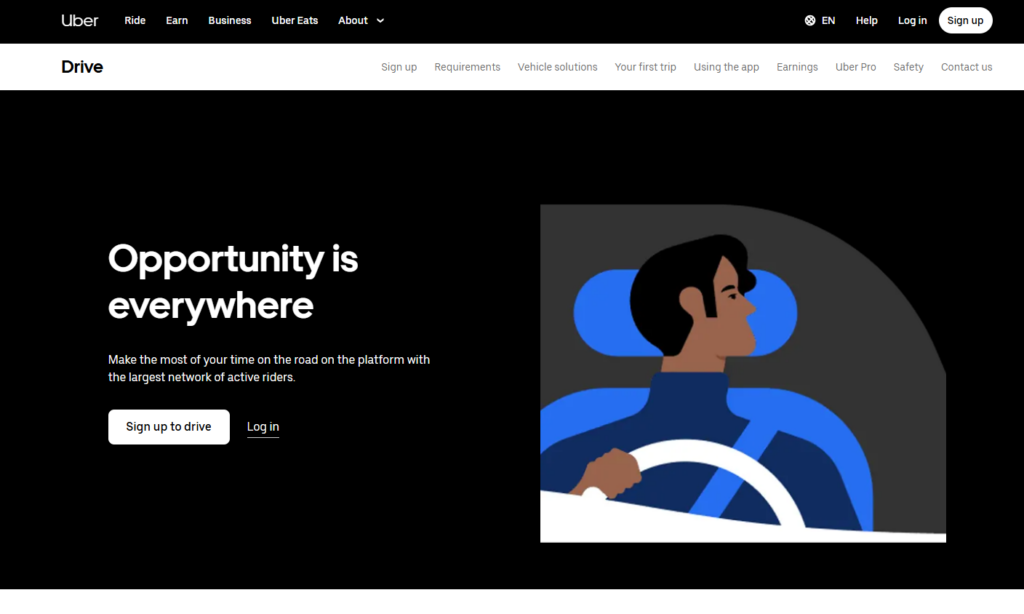
Uber is the name most people recognize, and for good reason. It operates in Nairobi, Mombasa, Kisumu, Naivasha, and other growing towns.
As an Uber driver partner, passengers book rides through the app, and you collect payment digitally minus Uber’s commission, which currently sits at around 25%.
What you need to get started:
- A car not older than 8 years
- Valid Kenyan driving license
- PSV (Public Service Vehicle) certificate
- National ID and KRA PIN
- Police clearance certificate
- Android or iOS smartphone with GPS
Realistic earnings: On a busy day in Nairobi, you can clear Ksh 3,000 to Ksh 5,000 before fuel costs. Full-time Uber drivers report monthly gross earnings of Ksh 60,000 to Ksh 90,000. Factor in fuel, which runs about Ksh 2,500 per day if you’re active, and your take-home is closer to Ksh 40,000 to Ksh 60,000.
Next step: Visit uber.com/ke/en/drive to begin your driver application. The process typically takes 3 to 7 days for verification.
2. Drive for Bolt
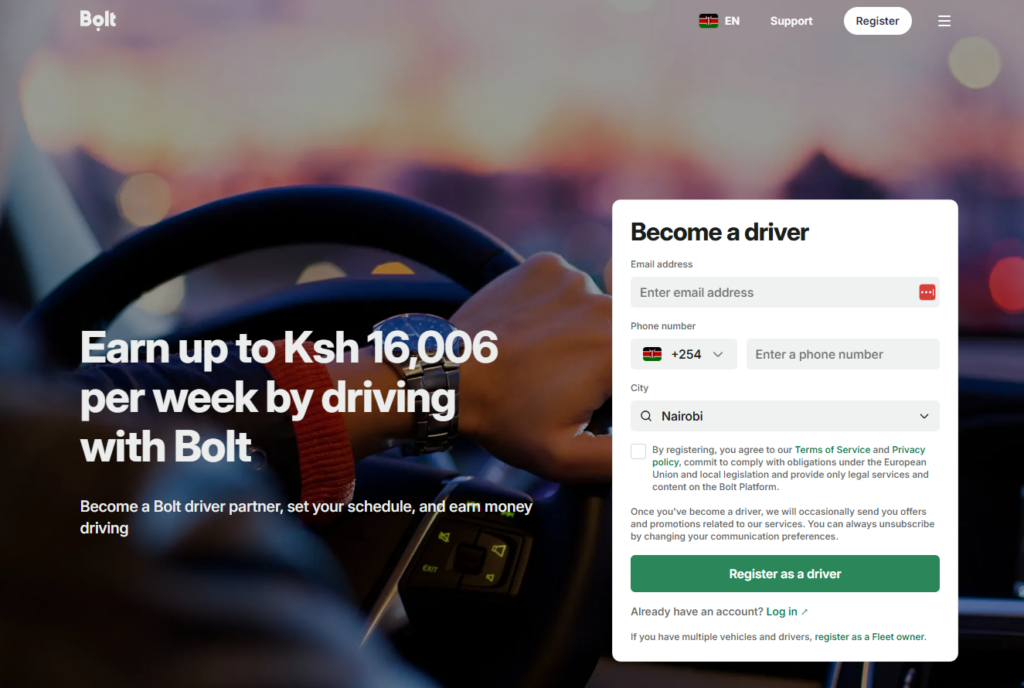
Bolt (formerly Taxify) has rapidly grown to become the platform with the largest network in Kenya, operating in over 16 towns including Nairobi, Mombasa, Kisumu, Eldoret, Nakuru, and more. Bolt’s commission rate, capped at 18% following government regulation, is lower than Uber’s, which directly means more money in your pocket per trip.
Bolt also pays drivers a branding bonus of about Ksh 2,350 weekly if you hit 65 trips with their logo on your car.
That adds up to roughly Ksh 9,400 extra per month just for meeting trip targets.
Bolt Lite operates in Nairobi, Kisumu, Mombasa, and Nakuru and accepts smaller hatchbacks with engines between 650cc and 1500cc, including Toyota Vitz, Mazda Demio, and Suzuki Swift. This lowers the entry barrier significantly.
Realistic earnings: Bolt drivers in Nairobi earn approximately Ksh 400 per hour. Full-time drivers pulling in 8 to 10 active hours daily can hit Ksh 60,000 or more per month.
Next step: Download the Bolt Driver app and complete registration at bolt.eu/ke.
3. Sign Up on Little Cab
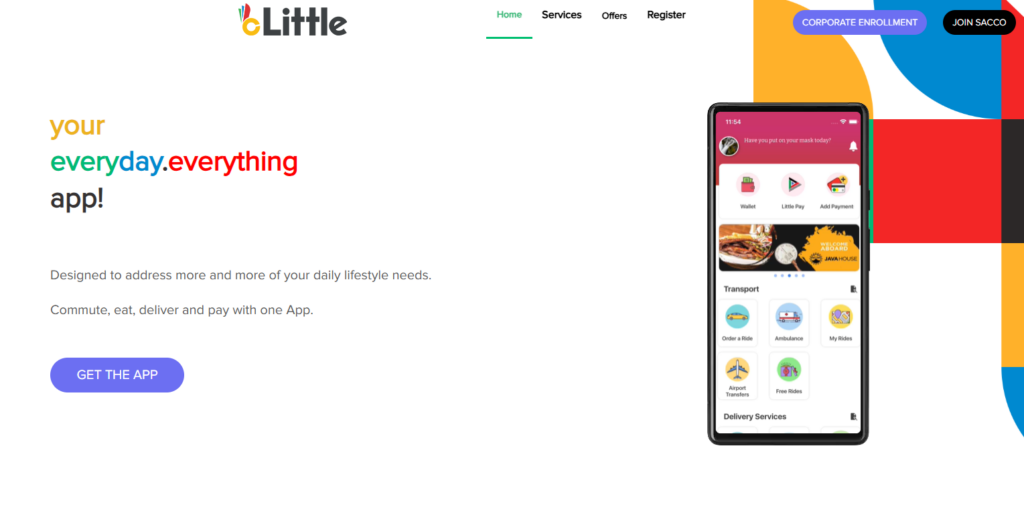
Little Cab is a homegrown Kenyan ride-hailing platform, and it charges the lowest commission among the big three at just 15%.
It also offers corporate accounts for businesses, which means more consistent, higher-value rides.
It is not as busy as Uber or Bolt, but it fills gaps, particularly for the corporate and mid-week market.
Many serious drivers run Little Cab alongside Bolt and Uber to increase ride volume.
Next step: Register via the Little Cab driver portal or download their driver app. You will need similar documents to Uber and Bolt.
4. Run Multiple Apps at the Same Time (The Power Move)
This is where serious earners separate themselves from average ones.
Running Uber, Bolt, and Little Cab simultaneously on one phone, or using a second device, means you are visible on all three platforms at once.
When one app is slow, another picks up the slack.
One driver profiled by Bizna Kenya reported gross weekly earnings of approximately Ksh 50,000 using this strategy across four platforms.
After fuel (Ksh 15,000/week), commissions (Ksh 12,500/week), and a car lease fee (Ksh 9,000/week), his monthly take-home was around Ksh 50,000.
That is not passive income. But for someone willing to treat this like a real job, the returns are competitive with formal employment, plus you set your own hours.
Pro tip: Peak hours in Nairobi are 6am to 9am, 12pm to 2pm, and 5pm to 8pm. Also, Friday and Saturday nights. Hit these windows hard, and skip the dead afternoon hours.
5. Deliver for Glovo
Glovo operates in over 25 Kenyan cities and towns, including Nairobi, Mombasa, Kisumu, Nakuru, Eldoret, Thika, Kitengela, Karen, and Diani.
It holds approximately 33% market share in Kenya’s online food delivery sector, making it the dominant player in the space.
Unlike ride-hailing, delivery jobs with your car in Kenya through Glovo are less dependent on traffic chaos since you plan routes better.
You deliver food and groceries from restaurants and stores like Chicken Inn, Carrefour, and Naivas.
Realistic earnings: Ksh 500 to Ksh 2,000 per day depending on order volume and your location.
What you need: Valid ID, smartphone, valid driving license, and insurance for your vehicle. The onboarding process is straightforward. Visit delivery.glovoapp.com/ke to apply.
6. Partner with Jumia for Delivery
Jumia is Kenya’s largest e-commerce platform, and it needs a constant supply of reliable delivery drivers to move products from warehouses and sellers to customers. Jumia pays approximately Ksh 100 per delivery, with variable pay for longer or out-of-town routes.
A motivated driver completing 20+ deliveries per day can earn Ksh 2,000 to Ksh 3,000 daily.
That’s Ksh 60,000 to Ksh 90,000 monthly if you are working full time. Jumia is particularly active during campaign seasons like Black Friday, when order volumes spike and earnings go up significantly.
Next step: Visit the Jumia logistics partner page and apply as a delivery driver. You will need a smartphone, valid ID, driving license, and a reliable vehicle.
7. Launch a Car Hire Business
Instead of driving strangers around yourself, rent your car to others and earn without being behind the wheel.
The car hire business in Kenya is steady because demand is constant: tourists, corporate clients, government contractors, and individuals who need a car for a day or a week.
You can operate independently with your own contracts, or list through platforms like RIDE, a peer-to-peer car rental service where you set your own price, approve renters, and maintain full control of your vehicle availability.
RIDE provides pre-vetted renters and protection plans for your car in case of physical damage.
Realistic earnings: Daily rental rates in Nairobi range from Ksh 3,500 to Ksh 8,000 depending on the vehicle. If your car is booked 15 days in a month at Ksh 4,000 per day, that is Ksh 60,000 before maintenance costs.
Critical note: Get a proper hire and reward insurance policy. Standard comprehensive insurance does NOT cover your vehicle when it is earning commercially. This is non-negotiable.
8. Offer Airport Transfer Services
JKIA and Wilson Airport in Nairobi, MSIA in Mombasa, and Kisumu International Airport receive thousands of travelers daily.
These travelers need reliable, professional transport from the airport to hotels, homes, and offices.
And many of them are willing to pay premium prices for a guaranteed, punctual ride.
Airport transfers are one of the most profitable car business ideas in Kenya because they are pre-booked, meaning no dead hours of waiting.
Rates for airport transfers in Nairobi range from Ksh 1,500 for a basic sedan to Ksh 5,000 or more for executive vehicles.
How to build this side hustle:
- Partner with hotels and guesthouses who refer guests to you.
- List on platforms like Airbnb Experiences or travel aggregators.
- Create a simple WhatsApp Business profile with your rates and service area.
- Build a referral system with Airbnb hosts and travel agents.
A professional, punctual airport driver who shows up on time and keeps a clean car will never lack clients through word of mouth alone.
9. Corporate and Executive Transport
Companies pay well for reliable, professional drivers who transport executives, visiting clients, and staff to and from meetings.
This is a B2B version of ride-hailing, but the rates are 3 to 5 times higher, the clients are repeat customers, and you can sign monthly contracts.
Platforms like Little Cab have dedicated corporate services. But the real money is in building direct relationships with HR managers and office administrators at companies in your area.
What you need: A presentable, well-maintained vehicle (ideally a sedan or SUV), a suit or professional attire, and the ability to be on time, every time. Discretion also matters in this market.
Realistic earnings: A single corporate client on a monthly retainer can pay Ksh 30,000 to Ksh 80,000, depending on the scope.
10. School Shuttle Services
Every school morning and afternoon, thousands of parents scramble to get their children to and from school.
If you live near a residential estate or suburb, a school shuttle route could become one of your most consistent, predictable income streams.
Fix a route, agree on a monthly fee per child (typically Ksh 3,000 to Ksh 6,000), and fill your vehicle with 4 to 6 children.
That is potentially Ksh 18,000 to Ksh 36,000 per month for two to three hours of work per day, Monday to Friday, during school terms.
What to consider: You will need a PSV license and a vehicle with valid insurance. Parent-teacher associations (PTAs) are your best marketing channel. A recommendation from the school itself can fill your vehicle instantly.
11. Courier and Logistics Services
Beyond food delivery apps, there is a massive market for general courier and logistics services in Kenya.
Small businesses, law firms, hospitals, pharmacies, and wholesale shops regularly need documents, samples, stock, and goods moved quickly across town or between counties.
You can position yourself as a dedicated courier for 2 to 3 businesses in your area on a monthly retainer, or operate on-demand using WhatsApp and phone bookings.
Logistics services that cover upcountry routes, such as Nairobi to Nakuru or Nairobi to Kisumu, can command Ksh 5,000 to Ksh 15,000 per run depending on the cargo volume.
Next step: Identify 5 small businesses near you, approach them directly, and propose a monthly delivery retainer at a fixed rate. Start there before worrying about scaling.
12. Wrap Your Car with Brand Advertising
This is as close to passive income as a car owner gets.
Brands pay car owners to wrap their vehicles with advertising, and you simply drive your normal routes while the brand gets visibility.
In Kenya, platforms and agencies manage these arrangements.
Bolt, for instance, pays its own branded drivers Ksh 2,350 weekly on top of ride earnings for displaying their branding.
Other companies run independent car advertising campaigns, particularly in Nairobi.
Realistic earnings: Ksh 5,000 to Ksh 15,000 per month depending on the brand, city, and how many kilometers you cover. The more you drive, the more the advertising is worth.
How to find these deals: Follow local marketing agencies on LinkedIn and Instagram. Approach fast-moving consumer goods (FMCG) companies, banks, and telecoms directly, or keep an eye out for campaigns run by Bolt and similar platforms.
13. Safari and Tour Driving
If you own or can access a 4WD vehicle, safari and tour driving is one of the highest-margin car businesses in Kenya.
International tourists pay in USD, EUR, or GBP, meaning exchange rates work in your favor.
A single day of game-drive guiding in the Maasai Mara or Amboseli can earn you USD 100 to USD 300 or more.
Even for domestic tourism, weekend getaway packages to Nakuru, Naivasha, or the coast are in high demand.
You do not need to own a tour company. Partner with one as a contracted driver-guide.
What you need: A well-maintained 4WD vehicle, strong knowledge of Kenya’s parks and attractions, a PSV license, and basic hospitality skills. Tour operator licenses and Kenya Wildlife Service permits are also required if you are running your own operation.
14. Mobile Business Support (Be a Business on Wheels)
Your car is a logistics tool for businesses that cannot afford to have their own delivery fleet.
Position yourself as a dedicated logistics partner for a supermarket, pharmacy, hardware shop, or online store in your area.
This is different from generic courier work.
You become part of their operations, handling daily stock runs, supplier pickups, and customer deliveries.
Some car owners in Nairobi have turned this into a profitable full-time arrangement, earning Ksh 40,000 to Ksh 70,000 monthly from one or two business clients.
The pitch is simple: “I will handle all your deliveries for a flat monthly fee. You save on hiring a driver and buying a vehicle. I earn a predictable income.“
15. Offer SafeBoda-Style Shuttle Alternatives in Smaller Towns
SafeBoda popularized the idea of structured, tech-enabled transport beyond Nairobi.
In smaller towns and peri-urban areas where ride-hailing apps have not fully penetrated, there is a gap for organized shuttle services between estates, markets, and town centers.
If you are based in a town like Thika, Machakos, Kitale, Kericho, or Kisii, a fixed-route shuttle that runs predictable hours can carve out consistent income.
Think of it as a matatu alternative but more comfortable, safer, and booked in advance via WhatsApp.
Charge Ksh 100 to Ksh 300 per seat, carry 4 to 7 passengers per run, and do 4 to 6 runs per day.
The numbers add up to Ksh 2,400 to Ksh 12,600 per day depending on your load and route. This is an underexplored profitable car business idea in Kenya, particularly outside of Nairobi.
Final Word: Stop Treating Your Car Like an Expense
Most people in Kenya own a car and earn zero from it beyond the convenience of not taking a matatu.
That is a wasted asset in an economy where the demand for transport, delivery, and logistics is growing every single year.
You do not need to do all 15 things.
Pick one.
Get it running.
Then layer in a second stream.
The best car side hustle in Kenya is the one you actually start.
One more thing.
Whatever you do, sort out the right insurance first. Standard personal insurance is void the moment you start commercially transporting passengers or goods.
A quick call to your insurer to upgrade to commercial vehicle cover is the difference between building a business and losing everything after one incident.
Your car is ready. The question is whether you are.
Read also: