

7 Profitable Ways to Make Money With Jumia Kenya
Everyone’s talking about making money online, but most people are stuck scrolling through get-rich-quick schemes that lead nowhere. Meanwhile, Jumia Kenya is processing 60% of its orders from rural areas, proving that real opportunities exist right here in Kenya—if you know where to look.
Jumia boasts of having over 4 million customers in Kenya with an additional 215,000 potential customers visiting this marketplace every month.
That’s 4 million people actively looking to buy products. The question isn’t whether the opportunity exists—it’s whether you’re going to take it.
I’m going to show you seven proven ways to make money with Jumia Kenya in 2025. No fluff. No theory. Just actionable strategies that work.
TL;DR: How to Make Money with Jumia Kenya
The fastest ways to earn with Jumia Kenya:
- Become a Jumia Seller – List products on the Jumia Marketplace and reach 4 million+ customers (5-15% commission)
- Join the Jumia KOL Affiliate Program – Earn 1-13% commission on sales through your unique affiliate links
- Start Jumia Dropshipping – Sell without inventory (40% of sellers make at least Ksh 50,000 in profit per month)
- Become a JForce Sales Consultant – Place orders for others, earn commissions with zero startup capital
- Leverage Jumia Express Services – Offer faster delivery as a premium seller
- Sell High-Demand Electronics – Focus on trending categories like smartphones and accessories
- Combine Multiple Income Streams – Stack methods for maximum earnings
Time to first earnings: 1-7 days depending on method chosen.
That said, let me walk you through proven ways to make money with Jumia Kenya.
1. Become a Jumia Seller
Let’s start with the most obvious—and most profitable—method: becoming a Jumia vendor.
Why Jumia Selling Works
Think about it.
You’re getting access to 4 million customers and 215,000 monthly visitors without spending a shilling on customer acquisition.
Traditional retail?
You’d need to rent a shop in Nairobi CBD and pray for foot traffic. With Jumia, the customers are already there, credit cards ready.
What You’ll Actually Earn
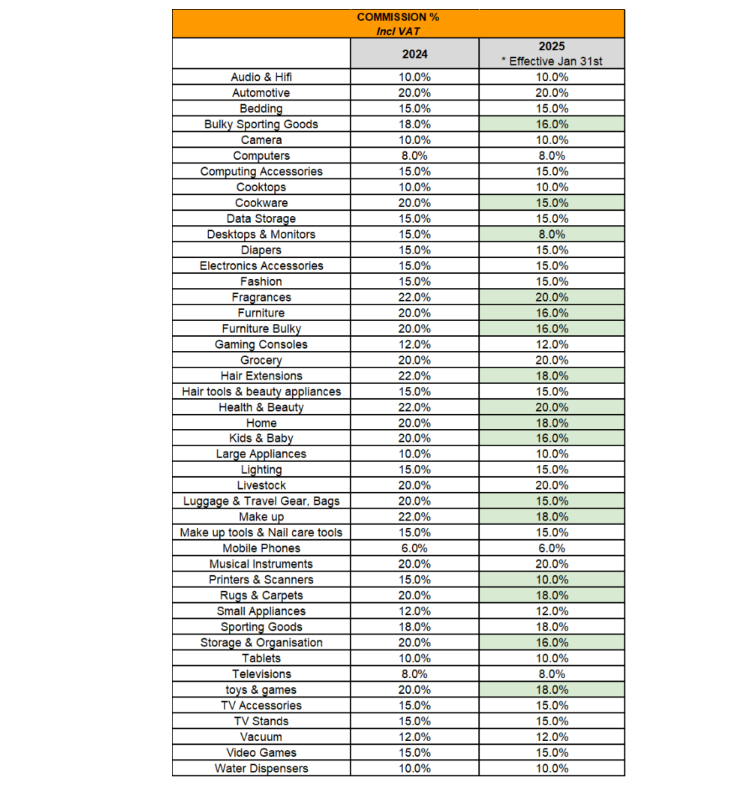
Jumia’s commission fees are calculated based on product categories, with rates updated as of January 31st, 2025. While specific rates vary by category, commission fees typically range from 5% to 15% depending on the product category.
Let’s do the math:
If you sell Ksh 100,000 worth of electronics monthly at a 10% commission, you’re keeping Ksh 90,000. 40% of sellers make at least Ksh 50,000 in profit per month, and that’s just the average. Top sellers? They’re clearing six figures monthly.
How to Start Selling on Jumia Kenya (Step-by-Step)
Requirements you need:
- Valid Kenyan National ID
- KRA PIN certificate
- Business registration documents (if applicable)
- Bank account details for payments
- Quality product images
- Reliable product sourcing
The registration process:
- Visit the Jumia Seller Center at vendorcenter.jumia.com
- Complete the registration form with your business details
- Submit required documents (ID, KRA PIN, bank details)
- Wait for approval (typically 1-7 days)
- Complete the New Seller Training provided by Jumia
- List your products with competitive pricing and clear descriptions
- Start selling and manage orders through your Vendor Center
Time estimate: Registration takes 15 minutes. Approval within a week. First sale? Could happen day one.
What Sells Best on Jumia Kenya in 2025
Electronics, solar products, and kitchen appliances are among the highest-demand categories.
Why? Because Kenyans are practical.
They’re buying essentials, not luxuries.
Top-performing product categories:
- Electronics – TVs, sound systems, smartphones (consistently high demand)
- Fashion – Clothing, shoes, accessories (high volume, lower margins)
- Home & Kitchen Appliances – Kettles, blenders, cookers (steady repeat buyers)
- Solar Products – Panels, lights, chargers (rural market boom)
- Health & Beauty – Skincare, cosmetics (growing wellness trend)
- Computing – Laptops, accessories, networking equipment
Here’s the insider tip: 58% of orders originate from non-urban areas, driven by mobile-first engagement. The rural market is exploding, and most sellers are ignoring it. Don’t be most sellers.
The Challenges You’ll Face Selling on Jumia in Kenya
Delivery logistics: Unlike selling physically where customers handle transport, you’re responsible for getting products to Jumia’s drop-off points. Plan for this.
Order cancellations: Some customers place orders then ghost. Challenges include cancellation of orders after purchase and customers failing to pick up goods after delivery. Build this into your margins.
Competition: You’re not alone. But here’s the thing—most sellers half-ass their listings. Professional photos, detailed descriptions, and competitive pricing will put you in the top 20% immediately.
Next step: If you need quality electronics to sell, check out smartphones and accessories at Techstore Kenya for reliable wholesale sourcing options.
2. Jumia Affiliate Marketing Kenya (Closed by the way)
Want to make money without handling inventory, customer service, or shipping? The Jumia KOL Program (Key Opinion Leader) is your answer.
How the Jumia Affiliate Program Actually Works
The Jumia affiliate program in Kenya provides commissions ranging from 1% to 13% on each sale, depending on product category and customer status.
You promote products, someone buys through your link, you get paid.
Simple.
You can start working immediately if you are an affiliate or receive approval within a week if you’re a content creator/influencer, and you get compensated for your sales with the payment method you choose at the end of every month.
The Three Types of Jumia KOL Accounts
1. Standard Affiliate – Anyone with a website, blog, or social media can join.
2. Micro-Influencer/Content Creator – For those with smaller but engaged followings (500-5,000 followers).
3. Macro Influencer – Established influencers with larger audiences.
The beauty?
The KOL program is totally free to join, unlike other affiliate programs that demand payment before obtaining full membership.
Real Earnings from Jumia Affiliate Marketing
One affiliate reported earning 15K last month through the Jumia KOL program. That’s not life-changing money, but it’s extra income for promoting products you’d probably recommend anyway.
Your commission on sales is tracked for up to 7 days after someone clicks your affiliate link. This means if someone clicks your link on Monday but buys on Friday, you still get paid.
How to Join the Jumia KOL Affiliate Program
Step-by-step registration:
- Visit kol.jumia.com and click “Register”
- Choose your account type (Affiliate, Micro-Influencer, or Macro Influencer)
- Provide your details:
- Personal information
- Website or social media links
- Tax ID (National ID works)
- Preferred payment method
- Wait for approval (instant for affiliates, up to 7 days for influencers)
- Access your KOL dashboard and start generating affiliate links
- Promote products across your platforms
- Get paid monthly via MPESA or bank transfer (minimum threshold: €10 for individuals)
Generating and Using Your Affiliate Links
There are two ways to generate affiliate links: using the custom link tool where you insert your affiliate ID into any Jumia product URL, or selecting from provided category banners in your KOL dashboard.
Where to promote:
- Your blog or website
- Instagram stories and posts
- Facebook groups and pages
- WhatsApp status and groups
- Twitter/X threads
- TikTok videos
- YouTube descriptions
- Email newsletters
Time estimate: Setup takes 20 minutes. First commission? Within a week if you have an engaged audience.
3. Jumia Dropshipping Kenya (Sell Without Inventory)
Dropshipping is the closest thing to passive income in e-commerce.
But here’s what nobody tells you: Jumia’s dropshipping model works slightly differently from marketplaces like Amazon because sellers often handle the stock.
Jumia Dropshipping in Kenya Explained
How it works on Jumia:
Model 1 (Standard Seller)
You keep products at your warehouse. When someone orders, you get a notification, mark it “ready to ship,” and Jumia sends a motorcycle rider to your warehouse to pick up the ordered item and deliver it to the buyer.
Model 2 (Jumia Express)
You ship your inventory to Jumia’s warehouse. They handle storage, packaging, and shipping. Faster delivery, but higher fees.
The reality?
True dropshipping (where you never touch the product) is harder with Jumia.
Dropshipping from AliExpress to Jumia isn’t generally recommended due to shipping times from China that can take weeks or months, quality control issues, and slim profit margins.
Starting Capital Required
To start a dropshipping business in Kenya, you should plan to have around Ksh 30,000 to cover domain, hosting, store setup, marketing, and product sourcing.
But with Jumia?
You can start with less since you’re using their platform.
The smart approach: Start with Ksh 20,000-30,000, source products locally from wholesalers on Jiji or physical markets, and list them on Jumia at competitive markups.
How to Succeed with Jumia Dropshipping
a). Choose your niche wisely
You should ideally choose a niche you know well, because if you’re unfamiliar with it, you won’t know what will potentially sell well and to whom.
b). Where to source products:
- Local wholesalers on Jiji marketplace
- Physical wholesale markets in Nairobi (Kamukunji, Eastleigh)
- Manufacturers offering dropship arrangements
- Other online sellers with good margins
Why most people fail
Sellers fail because they either stock the cheapest products to add big markups or pick products without sensible criteria, putting themselves ahead of customer needs rather than studying what their target market actually needs.
Success strategy:
- Research demand first – Use Jumia’s search trends to see what’s popular
- Source quality products – Maintain aggressive discounts to retain price-sensitive shoppers but never compromise on quality
- Price competitively – Check competitor prices and undercut by 5-10%
- Optimize for mobile – Ensure seamless mobile experiences as most Kenyan shoppers use smartphones
- Target rural markets – 60% of orders now come from rural areas where competition is lower
Time estimate: Product sourcing: 1-2 weeks. First sale: 1-3 days after listing.
Read also: 9 Best Phone Accessories Wholesalers in Nairobi (Updated).
4. Become a Jumia JForce Sales Consultant
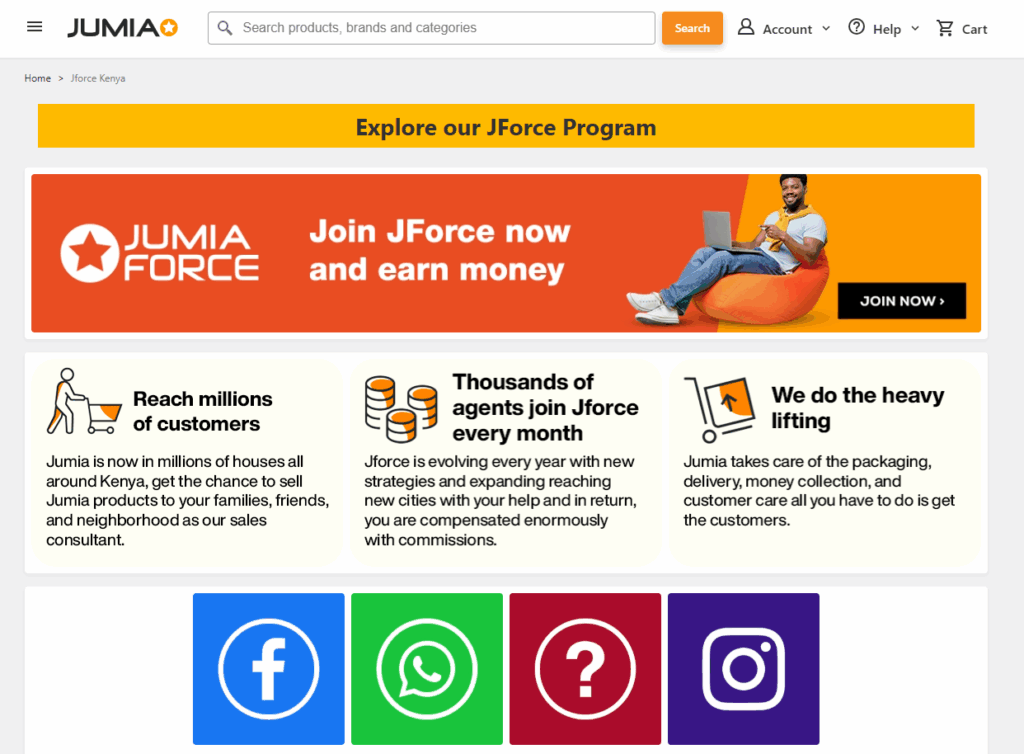
This is the zero-capital entry point. JForce is a nationwide network of agents placing orders on Jumia on behalf of other people like family, friends, and neighbours, earning commission on each order they place.
What JForce Actually Is
Think of yourself as a human shopping assistant. The JForce programme aims to overcome some of the main challenges for African e-commerce: lack of internet access, know-how to place orders, and trust to buy online.
Jumia has built a 26,000-person army of JForce agents who act as a “human engine” for e-commerce. You’re not an employee—you’re an independent sales consultant with complete control.
How Much Can You Earn as a JForce Agent?
Commissions are paid on the 10th day of every month for sales done in the previous month. The more orders you place, the higher your commission tier and earnings.
Benefits beyond commissions:
- Earn money even when shopping for yourself
- Recruit other agents and earn from their sales
- Attend Jumia social events and networking gatherings
- Zero startup capital required
- Work from anywhere
- Complete time flexibility
How to Join Jumia JForce Kenya
Registration steps:
- Visit the Jumia Kenya JForce page at jumia.co.ke/mlp-jforce
- Apply online or contact JForce management at 0740023671
- Provide required information:
- Full name and contact details
- Email address
- How you learned about JForce
- Referrer’s email (if applicable)
- Complete free training via video and learning materials sent by email
- Start placing orders for customers
- Track your commissions through your Jumia account
- Get paid monthly directly to your account
The JForce strategy:
Start with your immediate circle—family, friends, neighbors. Show them products on your phone, help them choose, place the order for them. You may place orders for your family, friends, strangers, or even yourself.
Time estimate: Registration: 30 minutes. Training: 1-2 hours. First commission: Within a week.
5. Leverage Jumia Express for Premium Earnings
Jumia offers two delivery methods for sellers: standard seller fulfillment where you deliver to drop-off stations, or Jumia Express where Jumia handles the entire process.
Why Jumia Express Matters for Sellers
Jumia Express ensures faster delivery time to customers since Jumia prioritizes these deliveries, though it’s more expensive due to warehousing fees.
But here’s the opportunity: Faster delivery = higher conversion rates = more sales. Delivery time-frames have improved in many rural towns, dropping to between two and four days, but Express sellers get priority.
When to use Jumia Express:
- High-value, fast-moving products
- During peak shopping seasons (Black Friday, holidays)
- When targeting premium customers who value speed
- If you’re scaling and want to focus on sourcing, not logistics
Time savings: Eliminates packaging, labeling, and drop-off logistics. You ship bulk inventory once.
6. Focus on High-Demand Electronics and Trending Products
Smartphones are consistently among Jumia’s best-selling items, and smartphone penetration in Kenya has reached nearly 80%.
Why Electronics Are Your Best Bet
Market opportunity: There is huge demand for electronics in Kenya due to high penetration of mobile devices and internet usage.
Product categories with proven demand:
- Smartphones & Accessories – Cases, chargers, earphones, screen protectors
- Power Banks – Essential for Kenyans dealing with inconsistent electricity
- Laptops & Computing – Growing remote work culture
- Smart TVs – Affordable entertainment
- Solar Products – Solar products address daily necessities and energy challenges especially in rural areas
Where to source quality electronics: For reliable wholesale electronics perfect for Jumia selling, browse Techstore Kenya’s extensive catalog of smartphones, accessories, and computing products.
The Pricing Strategy That Works
Discounts up to 56% align with Kenya’s price-sensitive market and drive consumer behavior focused on affordability.
Competitive pricing formula:
- Research competitor prices on Jumia
- Calculate your true cost (product + shipping + fees)
- Add 20-30% margin
- Undercut competitors by 5-10%
- Use psychological pricing (Ksh 2,999 instead of Ksh 3,000)
Time estimate: Market research: 2-3 hours. Pricing optimization: Ongoing.
7. Stack Multiple Jumia Income Streams for Maximum Earnings
Here’s the real secret to making serious money with Jumia Kenya: Don’t choose one method. Stack them.
The Stacking Strategy
Beginner Level (Month 1-3):
- Start as a JForce agent (zero capital, learn the platform)
- Join the Jumia KOL affiliate program (promote while learning)
- Study what products sell best
Intermediate Level (Month 4-6):
- Become a Jumia seller with 5-10 products
- Continue JForce for supplementary income
- Scale affiliate marketing with targeted content
Advanced Level (Month 7+):
- Expand product catalog to 50+ items
- Implement Jumia Express for top sellers
- Build a team of JForce agents under you
- Focus on high-margin electronics and trending categories
Real Income Projections
Conservative estimate (3-6 months in):
- JForce commissions: Ksh 5,000-15,000/month
- Affiliate earnings: Ksh 10,000-20,000/month
- Direct selling profits: Ksh 30,000-80,000/month
- Total: Ksh 45,000-115,000/month
Aggressive estimate (6-12 months in):
- JForce team commissions: Ksh 15,000-30,000/month
- Affiliate with established audience: Ksh 20,000-50,000/month
- Scaling seller with 50+ products: Ksh 100,000-300,000/month
- Total: Ksh 135,000-380,000/month
These aren’t guarantees—they’re possibilities based on documented seller performance and aggressive execution.
Read also: #10 Profitable Ideas to Make Money With a Motorbike in Kenya.
Addressing Your Biggest Concerns
“Will This Actually Work for Me?”
More than 50,000 businesses, big and small, sell on Jumia today. They’re not smarter than you. They just started.
Jumia Kenya’s revenue is estimated at US$10.2 million with a 100% share in the electronics category. The market is massive and growing.
“How Much Time Will This Take?”
Part-time (10-15 hours/week): You can manage a small Jumia store, run affiliate promotions, and do JForce sales. Expect Ksh 20,000-50,000/month.
Full-time (40+ hours/week): Scale to multiple products, aggressive marketing, team building. Potential for Ksh 100,000+/month within 6 months.
“What About the Competition?”
Yes, there’s competition. But 60% of orders now come from rural areas, up from 54% last year. Most sellers are still fighting over Nairobi customers while ignoring the largest, fastest-growing market segment.
“What If I Don’t Have Capital?”
Start with JForce (zero capital). Build up earnings. Reinvest into inventory for selling. That’s the progression.
“What About Returns and Customer Complaints?”
Challenges include order cancellations and customers failing to pick up goods. Build a 10-15% buffer into your margins to cover these costs. It’s business—plan for it.
Your Action Plan: Next Steps to Start Making Money Today
Week 1: Foundation
- Day 1-2: Register for JForce and Jumia KOL affiliate program
- Day 3-5: Complete training, study best-selling products
- Day 6-7: Make first JForce sales, share first affiliate links
Week 2-4: Build Momentum
- Source 5-10 products locally for selling
- Register as a Jumia vendor
- List products with professional descriptions and photos
- Continue JForce and affiliate activities
Month 2-3: Scale
- Expand product catalog based on what’s selling
- Consider Jumia Express for top products
- Build social media presence for affiliate marketing
- Recruit JForce team members
Month 4+: Optimize
- Analyze sales data and double down on winners
- Cut underperforming products
- Invest profits into inventory and marketing
- Establish systems for sustainable growth
Final Thoughts
Making money with Jumia Kenya isn’t magic. It’s math. 4 million customers are visiting the platform, with 215,000 new potential customers every month. The traffic is there. The buyers are ready. The infrastructure exists.
What’s missing? You taking action.
Most people will read this article, feel excited, and do nothing. They’ll go back to complaining about the economy while someone else starts their Jumia store today and makes their first sale tomorrow.
Kenya has a chance to build one of the most inclusive digital commerce environments in Africa. You can either watch it happen or be part of it.
The choice, as always, is yours.
Ready to start? Visit the Jumia Seller Center, sign up for JForce, or join the KOL affiliate program today. For quality electronics to kickstart your Jumia selling business, check out Techstore Kenya’s complete product range.
Now go make it happen.
Read also: