

Best Fridges in Kenya: Top Brands, Prices & Buying Guide
You’re about to drop KSh 25,000 to KSh 400,000 on a fridge. That’s not pocket change.
You need to know exactly what you’re getting, which brands deliver, and which features actually matter versus the ones that just jack up the price.
Here’s the thing: most Kenyans waste money on fridges because they focus on the wrong metrics.
They buy based on brand hype or fancy displays without understanding energy costs, real capacity needs, or the difference between inverter technology and regular compressors.
That stops today.
This guide breaks down the best fridges in Kenya for every budget, the brands that actually perform, and the features that save you money over time. No fluff, just actionable intel you can use right now.
TL;DR: Best Fridges in Kenya
Best Overall Value: Hisense and Ramtons dominate the budget-to-midrange (KSh 25,000 to KSh 90,000). Best capacity-to-price ratio in Kenya.
Premium Performance: LG and Samsung for KSh 90,000+ with inverter technology, frost-free systems, and 10-year compressor warranties.
Budget Winner (Under KSh 30,000): Mika 92L mini fridges offer the best energy efficiency at 60W versus competitors’ 90W.
Where to Buy: Jumia Kenya for widest selection, Carrefour Kenya for physical inspection, Hotpoint Appliances for premium brands.
Key Feature to Prioritize: Inverter compressor technology saves 30-40% on electricity bills. Worth the KSh 10,000-15,000 premium.
| Brand & Model | Type | Capacity | Key Features | Approx. Price (KSh) |
| Samsung RT35 | Double Door | 350L | Digital Inverter, All-around Cooling | 75,000 – 85,000 |
| LG GC-B569 | Bottom Freezer | 462L | Smart Inverter, DoorCooling+ | 150,000 – 165,000 |
| Ramtons RF/257 | Double Door | 213L | Direct Cool, Energy Efficient, Durable | 32,000 – 48,000 |
| Hisense REF205DR | Double Door | 205L | Frost Free, LED Lighting, Sleek Design | 44,000 – 67,000 |
| Von VRT-195 | Double Door | 195L | Tropicalized Compressor, Large Vegetable Box | 31,000 – 45,000 |
| Mika MRDCD138 | Double Door | 138L | Wide Voltage operation, Lock & Key | 28,000 – 38,000 |
| Beko Side-by-Side | Side-by-Side | 472L | NeoFrost Dual Cooling, Water Dispenser | 95,000 – 130,000 |
| Haier HRF-150 | Single Door | 150L | Direct Cool, Compact for Studios | 25,000 – 35,000 |
Do this now: Calculate your household’s capacity needs (100-150L per person), check energy star rating (4-5 stars minimum), then compare prices across three retailers before buying. Budget 48 hours for delivery nationwide.
Fridge Types in Kenya Explained
There are five main types available in the Kenyan market, and each serves a specific purpose.
a). Single Door Fridges (90L – 175L)
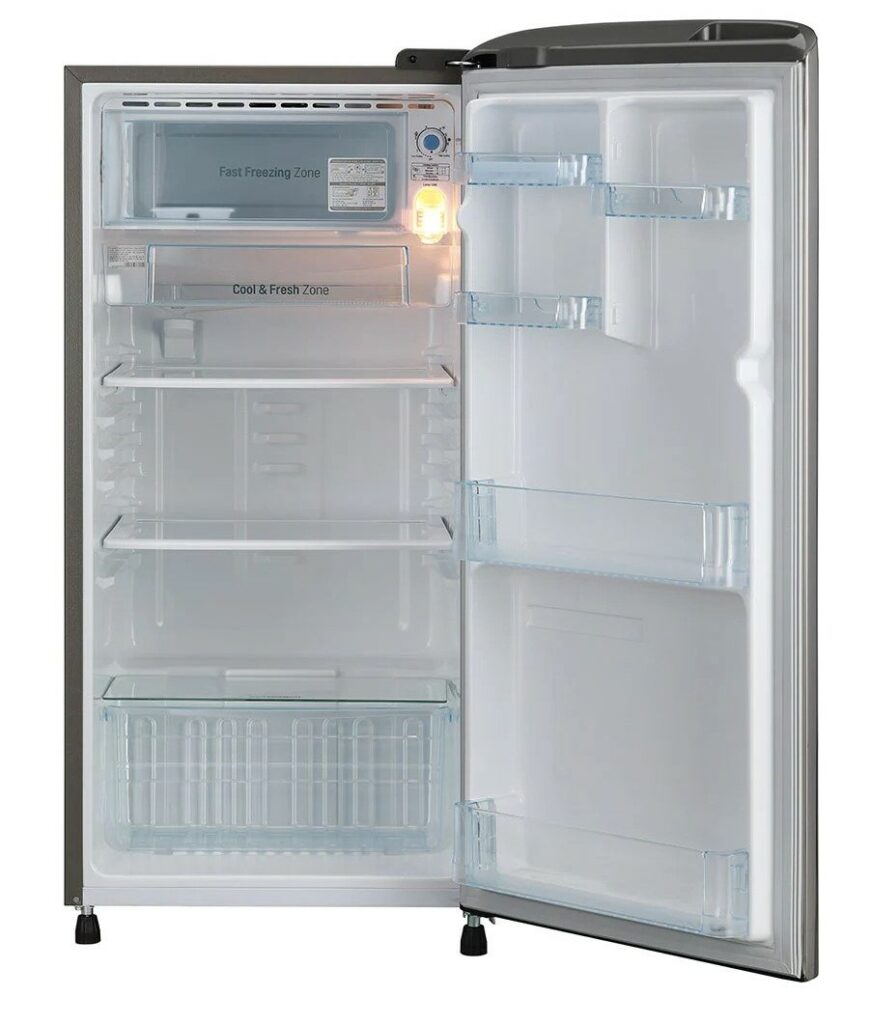
Best for: Students, bedsitters, couples, small families
Price Range: KSh 24,500 – KSh 45,000
These have the freezer compartment inside the main fridge area. They’re affordable and energy-efficient, using 30-40% less electricity than double door models. Perfect if you’re in a one-room or studio apartment.
Top picks: Mika 92L (KSh 25,000), Ramtons RF247 90L (KSh 26,000), Von Hotpoint HRD-081W 92L (KSh 27,000)
b). Double Door Fridges (120L – 400L)
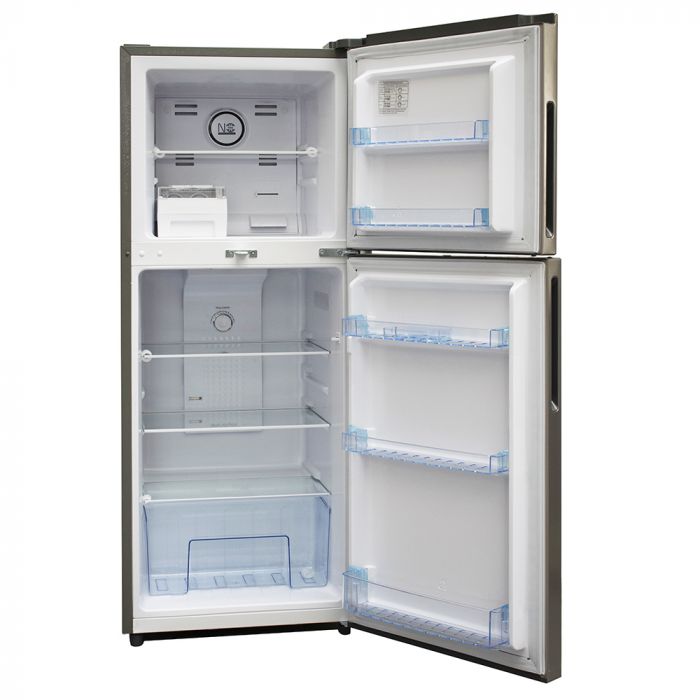
Best for: Families of 3-6 people
Price Range: KSh 27,995 – KSh 95,000
Separate freezer and fridge compartments. This is the sweet spot for most Kenyan households. Better organization, more capacity, and still relatively affordable.
The double door category offers the best value in Kenya because you get significantly more storage without doubling the price. A 200L double door costs roughly KSh 45,000-65,000, while two 100L single doors would cost more combined.
Top picks: Hisense 203L REF203DR (KSh 43,900), Samsung 231L (KSh 74,995), LG 234L (KSh 94,995)
c). Side-by-Side Fridges (400L – 700L)
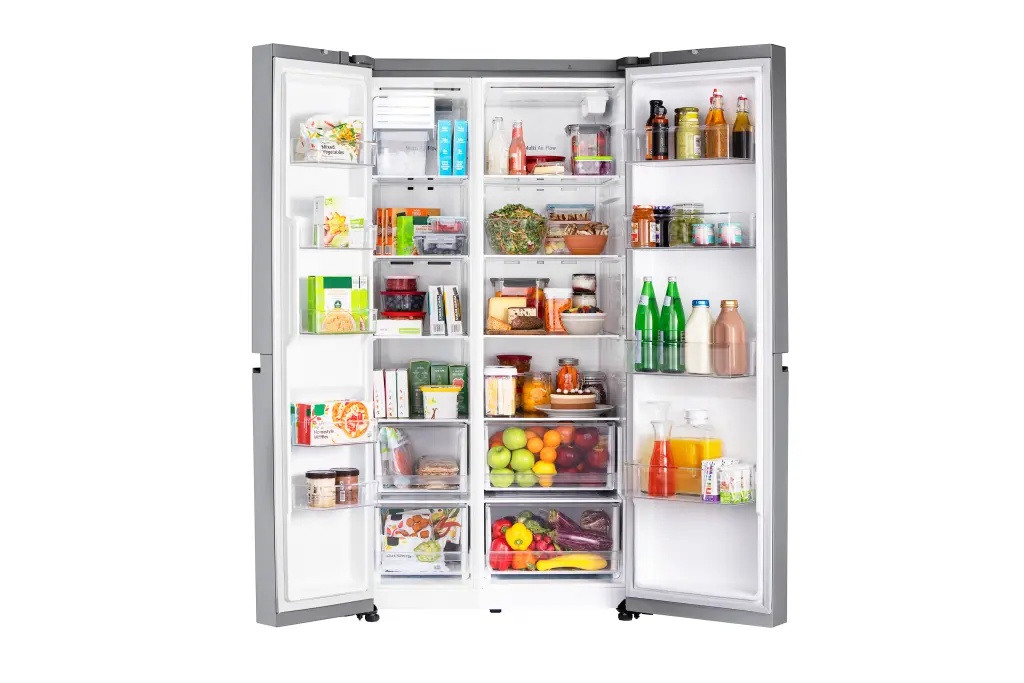
Best for: Large families (6+ people), those who entertain frequently
Price Range: KSh 160,000 – KSh 440,000
Fridge on one side, freezer on the other. Width ranges 32-36 inches, capacity up to 30 cubic feet. Many come with water and ice dispensers. These are premium units with smart features, Wi-Fi connectivity, and advanced cooling systems.
Top picks: Von Hotpoint HRZ-207S 482L (KSh 165,000), LG GC-X247CSAV 668L (KSh 309,995), Samsung side-by-side 302L (KSh 286,995)
d). Bottom Mount Freezer (200L – 320L)
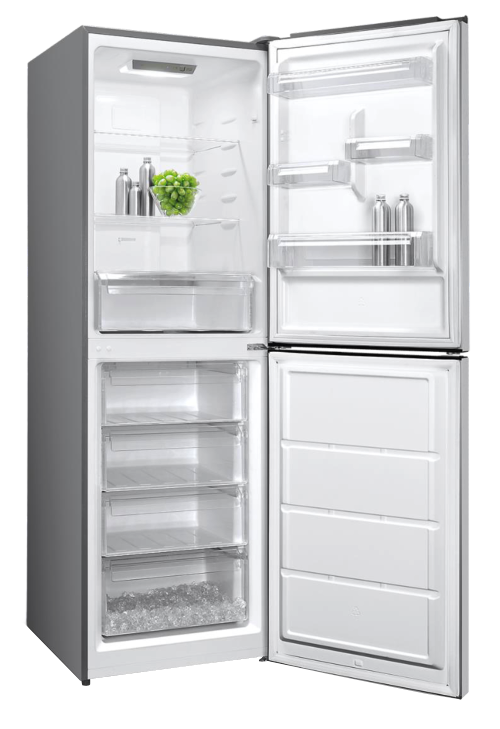
Best for: People who access fridge more than freezer
Price Range: KSh 85,000 – KSh 140,000
Freezer at the bottom, fridge at eye level. Ergonomic design because most people open the fridge section more frequently than the freezer. Shelves are easier to access without bending.
Top pick: Hisense 320L REF320DR with inverter technology (KSh 110,000)
e). Mini Fridges (50L – 94L)
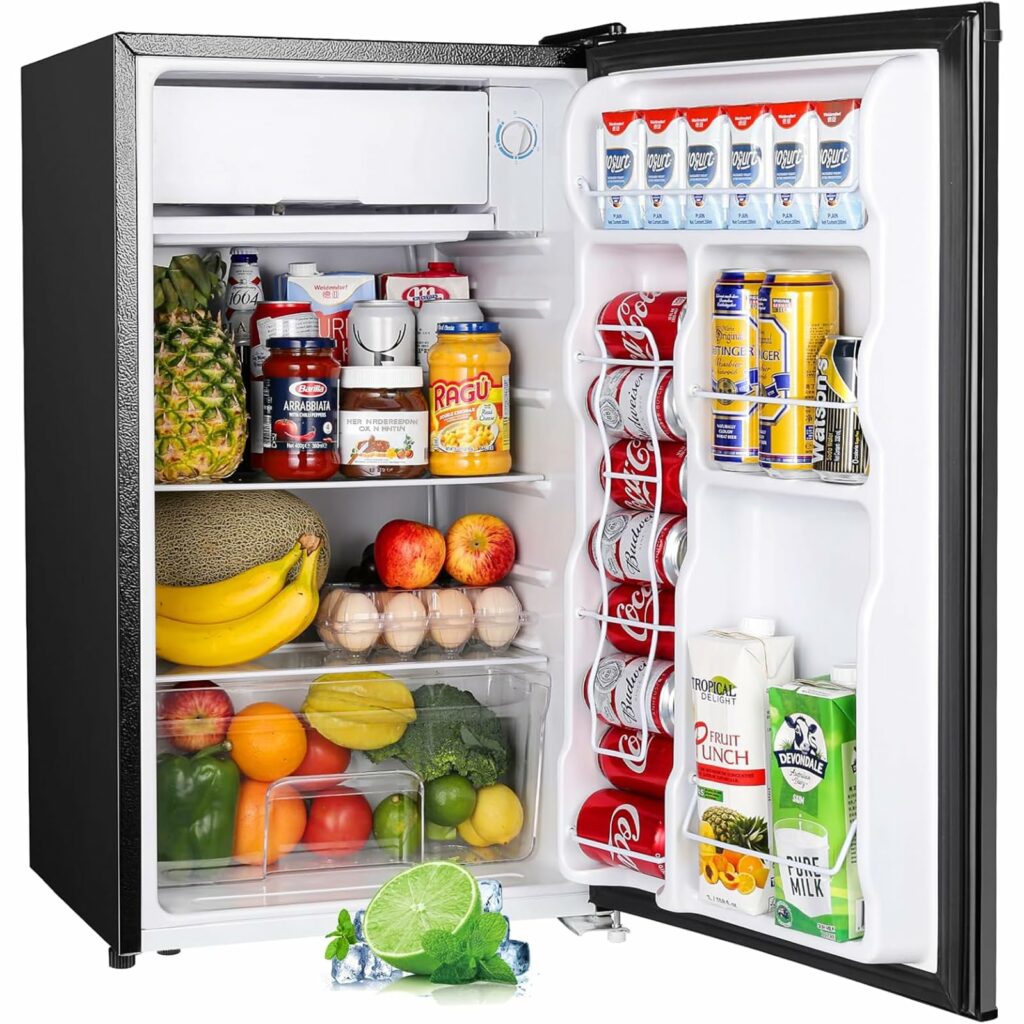
Best for: Offices, student hostels, bedrooms, small spaces
Price Range: KSh 15,000 – KSh 27,000
Compact units that can fit anywhere. They store about a week’s worth of food for one person. Don’t expect high-end features, but they get the job done for basic cooling needs.
Top picks: Mika 92L (best energy efficiency), Hisense REF094DR 94L (KSh 22,000)
Top Fridge Brands in Kenya: Performance Breakdown
Not all brands are created equal. Here’s what actually matters when choosing between them.
Budget Champions (KSh 25,000 – KSh 50,000)
Ramtons
Strengths: Best capacity-to-price ratio in Kenya. Over 20 years in the market. Widest selection from 90L minis to 213L double doors. Most readily available brand online and in physical stores.
Weaknesses: Build quality is adequate but not premium. Compressor warranties shorter than Samsung/LG (2 years vs 10 years).
Best Models: RF214 90L (KSh 26,000), RF217 213L double door (KSh 45,000), RF264 168L (KSh 42,000)
Energy Rating: Mostly 3-4 stars
Where to Buy: Jumia Kenya, Carrefour Kenya, Ramtons official website
Mika
Strengths: Longest warranty periods in the budget category. Good build quality. Large compartments. 4-5 star energy ratings across most models. Ice and egg trays included standard.
Weaknesses: Limited model selection compared to Ramtons. Slightly higher prices for similar capacity.
Best Models: Mika 92L mini (60W, most energy-efficient in category), MRDCD95SBR 255L double door (KSh 65,000)
Energy Rating: 4-5 stars
Where to Buy: Jumia Kenya, Carrefour Kenya
Von Hotpoint
Strengths: Tropical condenser design (performs better in hot, humid Kenyan climate). Reversible door options on select models. 5-year compressor warranty on single-door models vs 2-year on double doors.
Weaknesses: Inconsistent warranty structure across product lines. Aesthetics lag behind competitors.
Best Models: HRD-081W 92L mini (KSh 27,000), Vart series double doors, HRZ-207S 482L side-by-side (KSh 165,000)
Energy Rating: 3-4 stars
Where to Buy: Jumia Kenya, Hotpoint Appliances Kenya
Bruhm
Strengths: Good build quality at budget prices. 4-5 star energy ratings. Frost-free models available. 2-year warranty with 5-year compressor coverage.
Weaknesses: After-sales service can be hit or miss depending on location.
Best Models: BRS 95x 95L single door (KSh 28,000), BRD 348F double door frost-free (KSh 62,000)
Energy Rating: 4-5 stars
Where to Buy: Jumia Kenya, Carrefour Kenya
Midrange Winners (KSh 50,000 – KSh 100,000)
Hisense
Strengths: Insane capacity for the price. Best aesthetics in the category. Frost-free technology. Many models include inverter compressors. Multi-airflow systems. Water dispensers without plumbing (4.2L tanks). Smart features at midrange prices.
Weaknesses: Brand recognition lower than Samsung/LG in Kenya, though product quality is comparable.
Best Models: REF203DR 203L frost-free (KSh 43,900), REF226DR 230L bottom freezer (KSh 58,000), REF320DR 320L inverter (KSh 88,000)
Energy Rating: 4-5 stars, inverter models
Where to Buy: Jumia Kenya, Hotpoint Appliances Kenya, Hisense Kenya official dealers
Premium Performers (KSh 100,000+)
Samsung
Strengths: No Frost technology (faster cooling, no ice buildup). Twin Cooling Plus (separate temperature/humidity control for fridge and freezer). Convertible freezer modes. Power Cool function. 10-year compressor warranty on select models. Strong reputation for reliability.
Weaknesses: Premium pricing. Smart features (ice dispensers) can be reliability weak points based on global reviews. Entry and mid-level fridges are solid, high-end models less reliable than LG.
Best Models: RT42K5052SL 410L (KSh 125,000), 231L double door (KSh 74,995), 302L convertible freezer (KSh 286,995)
Energy Rating: 4-5 stars, inverter technology
Where to Buy: Carrefour Kenya, Hotpoint Appliances Kenya, Jumia Kenya
LG
Strengths: Industry-leading reliability. Holds 30% global market share in refrigerators. Most J.D. Power awards for kitchen appliances (3 consecutive years). Smart Inverter Compressor with 10-year warranty (compressor only). InstaView door technology (tap to see contents without opening). Total No Frost with Multi Air Flow. SmartThinQ Wi-Fi connectivity. Linear Cooling and DoorCooling+ technologies. UVnano auto-cleaning water dispensers (kills 99.9% bacteria).
Weaknesses: Premium pricing. Advanced features may be overkill for average users. Repair costs higher if out of warranty.
Best Models: GB-450UPLX 450L (KSh 137,995), GC-X247CSAV InstaView 668L (KSh 309,995), 234L with Smart Diagnostic (KSh 94,995)
Energy Rating: 5 stars, Smart Inverter technology
Where to Buy: Hotpoint Appliances Kenya (widest premium stock), Carrefour Kenya, Armco Kenya
Bosch
Strengths: German engineering. Bottom freezer models with exceptional cooling properties. 4-star freezing rating. Energy efficiency focus. Long-term reliability.
Weaknesses: Limited availability in Kenya. Highest price points. Fewer service centers than Samsung/LG.
Best For: Buyers prioritizing absolute quality over price
Where to Buy: Hotpoint Appliances Kenya
Fridge Prices in Kenya by Budget (2026)
Let’s talk numbers. Here’s what you actually get at each price point.
Under KSh 30,000
Capacity: 90-94L (adequate for 1 person, stores about one week of food)
Type: Mini fridges, single door
What You Get: Basic cooling. Manual defrost (you’ll scrape ice). 3-4 star energy rating. Simple mechanical temperature control. No fancy features.
What You Don’t Get: Auto-defrost, digital controls, separate freezer compartment, adjustable shelving in most models.
Best Buys:
- Mika 92L: KSh 24,500-26,000 (60W, most energy-efficient)
- Ramtons RF247 90L: KSh 26,000 (includes ice/egg trays)
- Von Hotpoint HRD-081W 92L: KSh 27,000 (tropical condenser)
- Hisense REF094DR 94L: KSh 22,000
Reality Check: Perfect for students, bedsitters, or office use. Don’t expect miracles. You’ll manually defrost every 2-3 months. But they work, they’re affordable, and if you maintain them properly, they’ll last 5-7 years.
KSh 30,000 – KSh 50,000
Capacity: 120-175L (good for 1-2 people or small families)
Type: Single door (larger) or entry-level double door
What You Get: Better build quality. Some models have adjustable shelving. Vegetable crispers. Egg trays. Interior lighting. 3-4 star energy ratings. Better temperature control.
Best Buys:
- Armco ARF-D188G 128L double door: KSh 27,995 (Cool Pack, lock and key)
- Armco ARF-D178G 118L double door: KSh 30,000
- Armco ARF-239 175L single door: KSh 38,995 (integrative fresh room)
- Ramtons RF264 168L double door: KSh 42,000
Sweet Spot: This is where you start getting real value. Double door options appear. Better capacity without breaking the bank.
KSh 50,000 – KSh 90,000
Capacity: 175-234L (ideal for families of 3-5)
Type: Double door, some frost-free options, early inverter models
What You Get: Frost-free technology (no manual defrosting). Better aesthetics. Glass shelves (easier cleaning). Multi-airflow systems. Some inverter compressors. 4-5 star energy ratings. Water dispensers on select models.
Best Buys:
- Hisense REF203DR 203L frost-free: KSh 43,900 (inverter, multi-airflow)
- Hisense REF226DR 230L bottom freezer: KSh 58,000 (frost-free)
- Bruhm BRD 348F double door frost-free: KSh 62,000
- Samsung 231L double door: KSh 74,995 (No Frost technology)
- Hisense REF320DR 320L: KSh 88,000 (inverter compressor)
Why This Matters: This is objectively the best value tier in Kenya. You get professional features (frost-free, inverter tech) without premium pricing. The savings on electricity bills justify the higher upfront cost within 18-24 months.
KSh 90,000 – KSh 160,000
Capacity: 234-450L (large families, serious cooking)
Type: Double door premium, bottom mount freezer, entry side-by-side
What You Get: Inverter compressors (30-40% energy savings). Smart Diagnostic features. Convertible freezer modes. Water dispensers. Premium finishes. 10-year compressor warranties. 5-star energy ratings. Wi-Fi connectivity on some models.
Best Buys:
- LG 234L with Smart Diagnostic: KSh 94,995
- LG GB-450UPLX 450L: KSh 137,995
- Samsung RT42K5052SL 410L: KSh 125,000
- Armco ARF-NF758 575L side-by-side inverter: KSh 159,995
Who Should Buy: Families who cook daily, entertain regularly, or store bulk groceries. The inverter technology pays for itself through lower electricity consumption.
KSh 160,000 – KSh 440,000
Capacity: 450-700L+ (commercial-grade capacity)
Type: Side-by-side, InstaView, smart fridges
What You Get: Everything. InstaView door (tap to see inside without opening). Ice and water dispensers. UVnano bacterial cleaning. SmartThinQ Wi-Fi connectivity. Inventory tracking. Vacation modes. Voice control. Premium stainless steel finishes. French door options.
Best Buys:
- Von Hotpoint HRZ-207S 482L side-by-side: KSh 165,000
- LG 306L bottom mount: KSh 252,495
- Samsung 302L convertible: KSh 286,995
- LG GC-X247CSAV InstaView 668L: KSh 309,995
- LG 635L InstaView with UVnano: KSh 349,995
- LG GC-X267MSEW 635L Mirror InstaView: KSh 329,995 (was KSh 439,995)
Reality Check: These are status symbols as much as appliances. The features are genuinely useful (UVnano kills 99.9% bacteria in water dispensers every hour), but you’re paying for cutting-edge tech. Only buy if you genuinely use the smart features or need massive capacity.
Critical Features That Actually Matter
Marketing teams love throwing fancy terms at you. Here’s what genuinely impacts your wallet and food quality.
1. Inverter Technology (Non-Negotiable for Midrange+)
What It Is: Smart compressor that adjusts motor speed based on cooling demand instead of turning on/off constantly.
Why It Matters: 30-40% reduction in electricity consumption. Quieter operation. Better temperature stability. Longer compressor lifespan.
Cost Premium: KSh 10,000-15,000 over non-inverter models
ROI: Pays for itself in 18-24 months through reduced electricity bills
Who Needs It: Anyone buying in the KSh 50,000+ range. At lower price points, the premium isn’t worth it because you can just buy a larger non-inverter model for the same money.
Brands with Best Inverter Tech: LG (Smart Inverter Compressor with 10-year warranty), Hisense (SmartDrive Inverter), Samsung (Digital Inverter)
2. Frost-Free vs. Direct Cool
Direct Cool: Natural convection. Ice builds up. You manually defrost every 2-3 months. Uneven cooling. Uses 30-40% less electricity than frost-free.
Frost-Free: Electric fans distribute air evenly. No ice buildup. No manual defrosting ever. Better temperature distribution. Uses more power but saves you time and hassle.
The Verdict: If you’re buying under KSh 40,000, direct cool is fine. Above that, always choose frost-free. Your time is worth more than the marginal electricity savings.
Best Frost-Free Models: Hisense REF203DR (KSh 43,900), Bruhm BRD 348F (KSh 62,000), all LG and Samsung models above KSh 70,000
3. Energy Star Rating (3-5 Stars)
What It Is: Official rating of electrical consumption. 5 stars = most efficient, 1 star = energy hog.
What You Actually Save:
- 3-star fridge (150L): ~90W, ~KSh 650/month
- 4-star fridge (150L): ~70W, ~KSh 500/month
- 5-star fridge (150L): ~50W, ~KSh 360/month
Annual Savings (4-star vs 3-star): KSh 1,800
The Math: A 4-star fridge costs KSh 5,000-8,000 more but saves KSh 1,800/year. Break-even in 3-4 years. Over a 10-year lifespan, you save KSh 18,000 minus the upfront premium = net savings of KSh 10,000-13,000.
Recommendation: Minimum 4-star rating for any fridge you keep 5+ years. Only go 3-star if budget absolutely demands it.
4. Capacity Calculation
Formula: 100-150L per person
Examples:
- 1 person (student): 90-100L mini fridge
- 2 people (couple): 150-200L single or double door
- 3-4 people (family): 200-300L double door
- 5-6 people: 300-450L double door or bottom mount
- 7+ people: 450L+ side-by-side
Reality Check: Don’t overbuy. Kenyans often buy fridges too large for their needs because “bigger is better.” A half-empty 400L fridge wastes electricity cooling empty space. Match capacity to actual usage.
5. Compressor Warranty
Standard: 1-2 years
Premium: 5-10 years (LG, Samsung high-end models)
Why It Matters: The compressor is 60-70% of the fridge’s cost if it fails. A 10-year warranty means the manufacturer stands behind their product.
Who Offers Best Warranties:
- LG Smart Inverter: 10 years (compressor only)
- Samsung Digital Inverter: 10 years on select models
- Von Hotpoint single doors: 5 years
- Most budget brands: 1-2 years
Action Step: If buying premium (KSh 100,000+), demand extended compressor warranty. It’s non-negotiable.
6. Features That DON’T Matter (for Most People)
Wi-Fi Connectivity: Unless you genuinely monitor your fridge from your phone daily, this is a gimmick. Adds KSh 20,000-40,000 to price for minimal utility.
Ice Dispensers: Convenient but adds complexity. More parts = more potential failures. Water dispensers (with tanks) are more reliable.
LED Displays: Look cool, add nothing to functionality. Save your money.
Convertible Freezers: Useful if you genuinely alternate between needing more fridge vs. freezer space seasonally. For 90% of users, it’s unnecessary.
Where to Buy Fridges in Kenya (2026)
Location matters. Here’s where to get the best deals and service.
Online Platforms
Jumia Kenya
Pros: Widest selection across all brands (Samsung, Bruhm, Ramtons, Hisense, LG, Mika, Von, Armco). Regular sales and promotions. Pay-on-delivery available. Customer reviews help decision-making. Free delivery in Nairobi for most models.
Cons: Can’t physically inspect before purchase. Return process can be bureaucratic if product has issues.
Best For: Budget to midrange buyers (KSh 25,000-100,000) who want selection and convenience.
Delivery: Next-day in Nairobi, 24-48 hours nationwide
Website: www.jumia.co.ke
Carrefour Kenya (Online + Physical)
Pros: Hybrid shopping (view online, inspect in-store). Ramtons, Samsung, TCL, Von, Hisense, Bruhm, Beko, Ohms, Haier. Up to 30% off during sales. Reliable warranty processing. Good customer service.
Cons: Fewer premium brands than Hotpoint. Stock varies by location.
Best For: People who want to see/touch before buying. Families making major purchases who value physical inspection.
Delivery: Free delivery in Nairobi on select models
Website: www.carrefour.ke
Hotpoint Appliances Kenya
Pros: Widest SKUs for premium brands. Specializes in Samsung, LG, Bosch, Beko, Von. Expert staff who understand specs. Up to 24-month warranty. Free next-day delivery. Best selection for high-end buyers.
Cons: Limited budget options. Premium pricing (though justified by service and warranty).
Best For: Premium buyers (KSh 100,000+) who want expert advice and comprehensive warranty.
Delivery: Free next-day delivery
Website: www.hotpoint.co.ke
Brand Official Stores
Ramtons Official Website
Pros: Full range from manufacturer. Official warranty. Sometimes better prices than retailers.
Cons: Limited to Ramtons brand only.
Website: www.ramtons.com
Hisense Kenya Official Dealers
Pros: Newest models first. Official warranty. Technical support direct from brand.
Website: Rehema House, 3rd/6th Floor, Standard Street, Nairobi (call 0758096036)
Physical Retail (Approach with Caution)
Luthuli Avenue, Nairobi
Pros: Sometimes lowest prices in Kenya.
Cons: High scam risk. Sellers may unbundle accessories and charge separately. Returns and refunds nearly impossible without police involvement. Some legitimate stores exist, but distinguishing them is difficult for average buyers.
Recommendation: AVOID unless you’re extremely experienced with Nairobi electronics trade and can spot scams.
Alternative: Stick with Carrefour, Hotpoint, or Jumia. The slight price premium is worth the security and legitimate warranty.
The Smart Buying Process (Step-by-Step)
Here’s exactly how to buy a fridge in Kenya without wasting money or making mistakes.
Step 1: Calculate Exact Capacity Needed (15 minutes)
- Count household members
- Multiply by 125L (middle of 100-150L range)
- Add 20% if you cook daily or buy groceries weekly
- Subtract 15% if you eat out frequently
Example: Family of 4 who cooks daily = (4 × 125L) × 1.20 = 600L… wait, that’s wrong. Let’s recalculate: (4 × 125L) + 20% = 500L × 1.20 = 600L. No. Correct math: 4 people × 125L = 500L, then add 20% = 500 + 100 = 600L…
Actually: 4 people × 125L = 500L base. Add 20% for daily cooking = 500L + (500 × 0.20) = 500L + 100L = 600L. That’s side-by-side territory, which is overkill.
Revised Example: Family of 4 = 4 × 125L = 500L base. If cooking daily, add 50L buffer = 550L needed. But that’s still very high.
Realistic Formula: For Kenyan households, use 100L per person for families. So family of 4 = 400L. If heavy cooking/entertaining, go to 450L. That’s more accurate.
Step 2: Set Firm Budget (5 minutes)
Budget Tiers:
- Entry: KSh 25,000-35,000 (mini/small single door)
- Value: KSh 35,000-55,000 (double door entry)
- Sweet Spot: KSh 55,000-95,000 (frost-free, inverter)
- Premium: KSh 95,000-160,000 (advanced features)
- Flagship: KSh 160,000+ (smart fridges)
Pro Tip: Always budget 10% extra for delivery, installation, and voltage stabilizer if your area has power fluctuations.
Step 3: Prioritize Features (10 minutes)
Rank these features 1-5 (1 = must-have, 5 = don’t care):
- Frost-free technology: ____
- Inverter compressor: ____
- Energy star rating (4-5 stars): ____
- Brand reputation/warranty: ____
- Water dispenser: ____
- Aesthetic/finish: ____
- Smart features: ____
Action: Circle your top 3 must-haves. Everything else is negotiable.
Step 4: Research Models (30-45 minutes)
- Visit Jumia Kenya: Filter by your capacity range and budget. Read customer reviews (focus on 3-star reviews, they’re most honest). Write down top 5 models.
- Check Carrefour Kenya: Compare prices for same models. Note any promotions.
- Visit Hotpoint Kenya: If buying premium (KSh 100,000+), check their exclusive stock.
- Cross-Reference: Use kenyaprice.com or toasterding.com for detailed model comparisons and real-world testing insights.
Step 5: Compare Total Cost of Ownership (15 minutes)
Don’t just look at sticker price. Calculate 5-year TCO:
Formula: Purchase Price + (Monthly Electricity × 60 months) + Estimated Maintenance = Total Cost
Example:
Option A: Ramtons RF264 168L direct cool, 3-star, KSh 42,000
- Electricity: 90W = ~KSh 650/month × 60 = KSh 39,000
- Maintenance: KSh 5,000 (manual defrosting labor)
- 5-Year TCO: KSh 86,000
Option B: Hisense REF203DR 203L frost-free inverter, 4-star, KSh 43,900
- Electricity: 70W = ~KSh 500/month × 60 = KSh 30,000
- Maintenance: KSh 1,000 (virtually none)
- 5-Year TCO: KSh 74,900
Winner: Option B saves KSh 11,100 over 5 years PLUS you get 35L more capacity and never defrost manually. This is why the sweet spot (KSh 50,000-90,000) delivers best value.
Step 6: Verify Warranty Terms (5 minutes)
Before buying, confirm:
✓ Total warranty period (1-2 years standard) ✓ Compressor warranty specifically (5-10 years on premium) ✓ What’s covered (parts, labor, both?) ✓ Authorized service centers in your city ✓ Process for warranty claims
Red Flag: If seller can’t provide written warranty documentation, walk away.
Step 7: Check Delivery and Installation (5 minutes)
Ask about:
- Delivery timeline (24-48 hours is standard)
- Installation included? (some retailers charge extra)
- Old fridge removal? (Jumia offers this on select models)
- Packaging disposal?
- Insurance during transport?
Pro Tip: Insist on testing the fridge before the delivery person leaves. Plug it in, confirm it powers on, check for unusual noises, verify all compartments open/close smoothly.
Step 8: Make Purchase (10 minutes)
Payment Methods in Kenya:
- M-Pesa (most common)
- Bank card
- Cash on delivery (Jumia)
- Installment plans (Lipa Mdogo Mdogo on some platforms)
Important: Save ALL documentation. Receipt, warranty card, delivery note, serial number. Take photos with your phone immediately.
Total Time Investment: 2-3 hours of research = saving KSh 10,000-50,000 and avoiding buyer’s remorse for 10 years.
Energy Efficiency: The Hidden Money Maker
Let’s talk actual numbers because this is where Kenyans lose or save thousands.
Real-World Electricity Costs (Nairobi Rates, 2026)
Kenyan Electricity Pricing (Average): KSh 24-28 per kWh depending on usage tier
Monthly Fridge Costs by Rating:
| Energy Rating | Power Draw | Hours/Day | kWh/Month | Cost/Month (KSh) |
|---|---|---|---|---|
| 3-star (150L) | 90W | 24 | 64.8 | KSh 1,555-1,814 |
| 4-star (150L) | 70W | 24 | 50.4 | KSh 1,210-1,411 |
| 5-star (150L) | 50W | 24 | 36.0 | KSh 864-1,008 |
Annual Savings (5-star vs 3-star): KSh 8,292-9,672
10-Year Savings: KSh 82,920-96,720
Inverter vs. Non-Inverter (Real Cost Comparison)
Non-Inverter Fridge (200L):
- Power: 90-100W
- Cost/Month: KSh 1,555-1,814
- Noise Level: High (constant on/off cycling)
- Temperature Fluctuation: ±3°C
Inverter Fridge (200L):
- Power: 60-70W (30-40% reduction)
- Cost/Month: KSh 1,037-1,210
- Noise Level: Whisper-quiet
- Temperature Fluctuation: ±1°C
Monthly Savings: KSh 518-604 Annual Savings: KSh 6,216-7,248 5-Year Savings: KSh 31,080-36,240
Inverter Premium: Usually KSh 10,000-15,000 extra upfront
Break-Even: 18-24 months
Verdict: If you’re keeping the fridge 3+ years (and you should keep it 7-10 years), inverter is a no-brainer.
How to Maximize Energy Savings (After Purchase)
- Location Matters: Keep fridge 6-8 inches from wall for air circulation. Don’t place near stove, oven, or direct sunlight. Poor ventilation = 15-20% higher electricity consumption.
- Temperature Settings: Fridge should be 3-4°C, freezer -18°C. Many Kenyans overcool (set too low), wasting 10-15% energy.
- Door Discipline: Every time you open the door, cold air escapes. Warm air enters. Fridge works harder to recool. Opening door every 5 minutes costs you KSh 100-150/month extra. Decide what you want BEFORE opening.
- Fill It Properly: A completely empty fridge wastes energy. A completely packed fridge blocks airflow. Aim for 70-80% full for optimal efficiency.
- Defrost Regularly (Non-Frost-Free): Ice buildup insulates, forcing fridge to work 20-30% harder. Defrost every 6-8 weeks.
- Clean Condenser Coils: Dust accumulation at compressor reduces efficiency by 15-20%. Clean every 3 months. Takes 10 minutes with a vacuum or soft brush.
- Check Door Seals: Close door on a piece of paper. If you can pull it out easily, seals are worn. Replace them (KSh 1,500-3,000). Bad seals waste 15-25% energy.
Common Buying Mistakes (and How to Avoid Them)
Mistake 1: Buying Based on Brand Hype Alone
The Trap: “Samsung is the best, so I’ll buy whatever Samsung I can afford.”
Reality: Samsung’s premium models (KSh 120,000+) are excellent. Their entry-level models (KSh 50,000-70,000) offer worse value than Hisense or LG equivalents.
Solution: Compare specific models, not brands. A KSh 60,000 Hisense with inverter technology beats a KSh 60,000 Samsung without inverter.
Mistake 2: Overbuying Capacity
The Trap: “We’re a family of 3, but let’s get a 500L fridge just in case.”
Reality: Half-empty fridge = wasted electricity cooling empty space + higher upfront cost.
Solution: Use the 100-125L per person formula. Add 20% buffer maximum. Don’t buy for hypothetical future needs.
Mistake 3: Ignoring Total Cost of Ownership
The Trap: “This KSh 35,000 fridge is cheaper than that KSh 50,000 one.”
Reality: The cheaper fridge might cost KSh 20,000 more over 5 years in electricity bills.
Solution: Calculate 5-year TCO (purchase + electricity + maintenance) before deciding.
Mistake 4: Choosing Aesthetics Over Function
The Trap: “The silver finish looks better than the dark silver.”
Reality: You’re paying KSh 5,000-8,000 extra for color. That money could upgrade you to inverter technology or frost-free.
Solution: Function first. Aesthetics only matter if two models are otherwise identical.
Mistake 5: Skipping Warranty Verification
The Trap: “The seller said it has a warranty.”
Reality: Verbal promises mean nothing. Get it in writing.
Solution: Demand written warranty documentation before payment. Verify compressor warranty separately (it’s often longer than general warranty).
Mistake 6: Not Testing Immediately Upon Delivery
The Trap: “I’ll test it later when I have time.”
Reality: If there’s a defect, you need to catch it while the delivery person is still there. Otherwise, proving it was damaged in transit becomes your problem.
Solution: Plug in immediately. Check all functions. Inspect for dents/scratches. Test door seals. Listen for unusual noises. Make delivery person wait.
Special Considerations for Kenyan Climate
Kenya’s climate creates specific fridge challenges. Here’s what matters.
Voltage Fluctuations
Problem: Kenya Power outages and voltage spikes damage compressors.
Solution: Buy a voltage stabilizer (KSh 3,500-7,000). Protects your KSh 50,000-300,000 investment from KSh 15,000-30,000 compressor replacement.
Best Brands for Voltage Tolerance: Von Hotpoint (tropical condenser), Hisense (built-in voltage protection on some models)
High Humidity (Coastal Regions)
Problem: Mombasa, Malindi, Lamu experience high humidity that increases frost buildup and condenser strain.
Solution:
- Frost-free is non-negotiable in coastal areas
- Von Hotpoint tropical condensers perform 15-20% better
- Clean condenser coils monthly (not quarterly) in humid climates
- Ensure 8-10 inches clearance from walls for maximum airflow
Hot Interior Temperatures (Turkana, North Kenya)
Problem: Ambient temperatures above 35°C force fridge to work 30-40% harder.
Solution:
- Prioritize 5-star energy ratings
- Inverter compressors handle heat better than standard compressors
- Never place fridge near windows with direct sunlight
- Consider dedicated cooling/ventilation in kitchen
Frequent Power Outages
Problem: Rural areas experience 4-8 hour outages regularly.
Solution:
- Cool Pack technology (keeps food frozen during outages): Available on Samsung, Ramtons, Armco models
- Avoid opening fridge during outages (food stays cold 4-6 hours in unopened fridge)
- Consider backup power (solar/generator) if outages exceed 8 hours
Your Next Steps (Action Plan)
You’ve got the information. Here’s your 48-hour action plan.
Today (30 minutes):
- Calculate exact capacity needed for your household
- Set firm budget (including 10% buffer)
- List your top 3 must-have features
- Bookmark Jumia, Carrefour, and Hotpoint websites
Tomorrow (60 minutes):
- Visit Jumia: Filter by capacity and budget, read reviews, shortlist 5 models
- Check same models on Carrefour and Hotpoint
- Compare prices and warranties
- Calculate 5-year TCO for top 3 models
- Make decision
Day 3 (15 minutes):
- Purchase from chosen retailer
- Verify delivery timeline
- Arrange for voltage stabilizer if needed
- Clear space in kitchen and ensure proper clearance
Delivery Day (30 minutes):
- Inspect packaging before delivery person leaves
- Check for dents, scratches, defects
- Plug in and test all functions
- Verify all compartments and features work
- Get delivery note signed
- Save all documentation with photos
First Week:
- Monitor for unusual noises or temperature issues
- Set optimal temperature (fridge 3-4°C, freezer -18°C)
- Organize items properly (70-80% full)
- Register warranty if required
Total Time Investment: 3 hours of research and decision-making
Potential Savings: KSh 10,000-50,000 upfront + KSh 30,000-90,000 over appliance lifetime through smart energy management
Final Thoughts
Buying a fridge in Kenya isn’t complicated. It’s just that nobody’s laid out the actual data without the marketing BS.
Here’s what matters:
For budget buyers (Under KSh 50,000): Ramtons and Mika offer best value. Prioritize capacity over features. Don’t expect miracles, but these will serve you well for 5-7 years.
For value seekers (KSh 50,000-90,000): This is the sweet spot. Hisense dominates. Get frost-free and inverter technology. Best ROI in the entire market.
For premium buyers (KSh 90,000+): LG and Samsung deliver on quality. The 10-year compressor warranties matter. Smart features are genuinely useful at this tier, not gimmicks.
You now know more about fridges in Kenya than 95% of buyers. You understand capacity calculations, energy ratings, TCO analysis, and where to buy safely.
Stop overthinking. Make your decision. Buy the fridge. Get on with your life.
The perfect fridge doesn’t exist. The right fridge for your budget, needs, and household does.
Go get it.
Read also:


![Best 32-Inch Smart TVs in Kenya [Prices, Specs & Top Picks]](https://techstore.co.ke/wp-content/uploads/2025/12/Best-32-Inch-Smart-TVs-in-Kenya-Prices-Specs-Top-Picks-768x432.jpg)